How to spot a fake Rolex: 12 checks a dealer actually uses
The visual checks that rule out most fakes, ordered from easiest to hardest, plus the honest part: the best replicas pass them, and only a watchmaker with the caseback off can clear a watch.
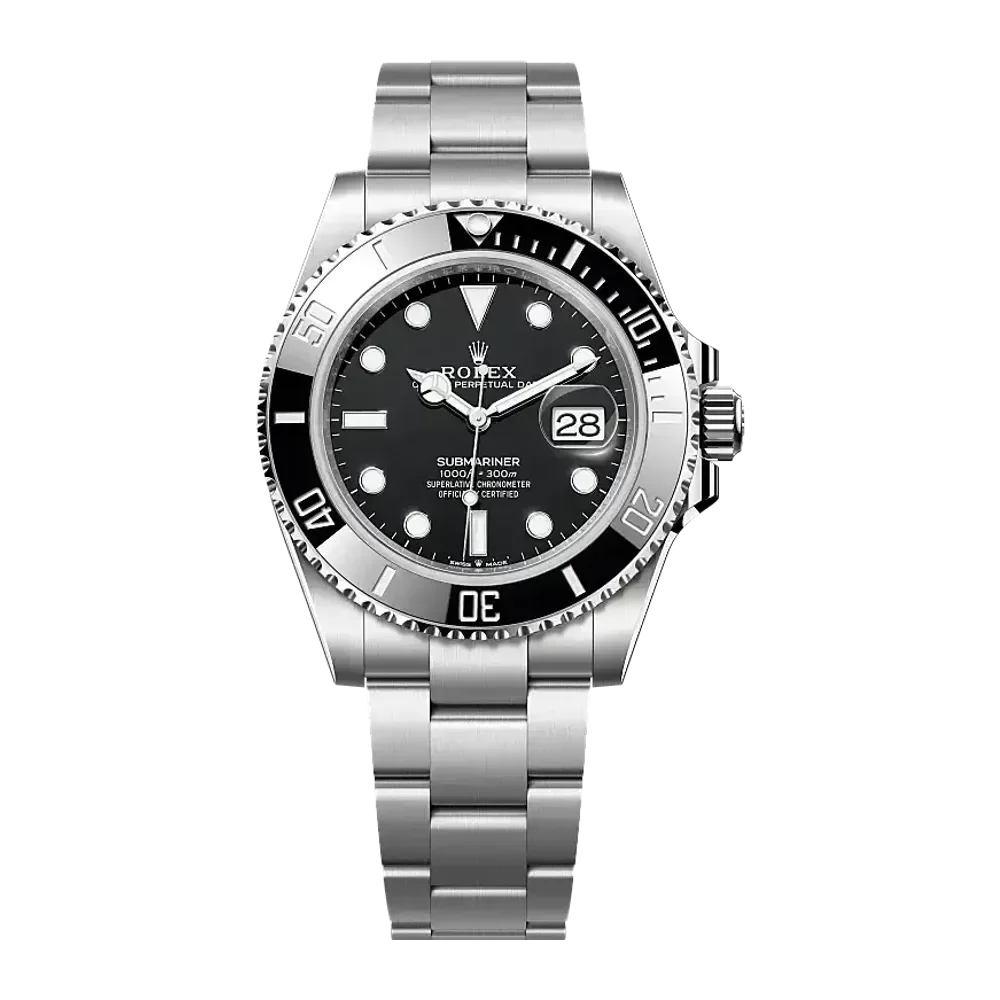
Why the easy checks catch fewer fakes every year
Ten years ago a fake Rolex announced itself: a ticking seconds hand, a flat cyclops, a light case, a crown logo that looked melted. Today's high-tier replicas copy the case dimensions, the bracelet, the engravings and, on some, the architecture of the movement. The checks below still stop the majority of fakes and cost nothing. What they cannot do is clear a watch. A watch that passes all twelve is worth paying a watchmaker or dealer to examine in hand; it is not a watch you can call genuine from a photo.
Work from the top down. Each check is cheaper than the next, and a failure on any one of them is enough to walk away.
The 12 checks, easiest to hardest
1. Weight and finishing
Pick it up. A steel Submariner on its bracelet has real heft because the case and the links are solid; gold references are heavier again. Cheap fakes are light, hollow in the links and sharp at the edges. Then look at the finishing: uniform brushing, crisp polished bevels on the lugs and bracelet edges, no tool marks. This catches the bottom half of the fake market and nothing above it.
2. The seconds hand sweep, and why it proves nothing
The old advice is that a real Rolex sweeps and a fake ticks. A genuine automatic runs at 28,800 vibrations per hour, eight beats a second, which reads as a smooth glide. But any decent replica now uses an automatic movement at the same beat rate and sweeps just as smoothly. A hand that jumps once a second rules a watch out. A sweeping one tells you nothing.
3. Cyclops magnification and centering
On date models the cyclops magnifies the date 2.5 times: the numeral should fill the window and look almost too large. Replicas commonly manage 1.5 to 2 times, so the date sits small inside the bubble. Check that the lens is centered over the window and bonded to the crystal with no haze, and view it from the side: the genuine lens is a tall, distinct dome, not a shallow blister.
4. Rehaut engraving
From around 2004 Rolex began engraving the rehaut, the inner ring between dial and crystal, with ROLEX repeated around the circumference, a small crown at twelve and, a little later, the serial at six o'clock. Each letter sits precisely in line with a minute marker on the dial, with even depth and a fine laser-cut texture. Fakes drift out of alignment as they go around, or cut too deep and bright. On references made before this era, a rehaut engraving is itself the anomaly.
5. Laser-etched crown on the crystal
Since 2002 the sapphire crystal carries a tiny laser-etched coronet at six o'clock, made of microscopic dots and nearly invisible to the naked eye. You need a loupe and angled light against a dark background to find it. Many replicas include one, but theirs is usually too visible, too coarse or off center. If you can see it from arm's length, that is a bad sign, not a good one.
6. Dial printing and lume
Under a 10x loupe, genuine dial text has razor edges and uniform thickness; the coronet at twelve has sharply defined prongs and no bleeding. Hour markers are applied white gold with lume filled cleanly to the border. Chromalight, on models from 2008 onward, glows blue for hours; earlier Super-LumiNova glows green. Uneven lume, misspaced text (SWISS MADE at six is a favorite) and fuzzy print edges are the most reliable tells short of opening the case.
7. Caseback
Modern Rolex casebacks are plain, with no exhibition window and no lettering apart from a few models such as the Sea-Dweller and Deepsea. A display caseback is a giveaway on any Oyster; the only genuine exceptions are the Cellini Prince and the 1908, both dress watches with sapphire backs. Dense engraved logos mean a fake. A green hologram sticker was genuine before about 2007, so its presence proves nothing and a badly printed one proves a lot.
8. Crown logo and clasp engravings
The winding crown carries a coronet with a mark beneath it: a bar or single dot on Twinlock crowns, three dots on Triplock sports models, sized by metal. It threads smoothly and screws down to a positive stop. On the clasp, the coronet and ROLEX engravings are deep and clean, the safety catch snaps, and the Easylink or Glidelock extension moves without grinding. Rough stampings and a tinny clasp are common on fakes because the clasp is the most expensive part to copy well.
9. Bracelet end links and stamps
The end links that meet the case fit with no gap and no rattle, and they carry a stamped code that matches the bracelet reference stamped near the clasp. Older bracelets add a clasp code inside the clasp that dates it. All of these should agree with each other and with the case reference. A current bracelet on an older watch, or a clasp stamped for a different reference, tells you parts have been swapped.
10. Serial and reference between the lugs
Remove the bracelet on references made before roughly 2009 and you find the reference engraved between the lugs at twelve and the serial at six. Both are fine, sharp and evenly spaced, with a frosted finish inside the digits. Later references moved the serial to the rehaut and left the lugs blank. A shallow, sandblasted or wrong-font serial means a fake or a re-cased watch. Rolex publishes no serial lookup; the serial gives you the era and must match the card.
11. Paperwork and warranty card by era
Paperwork supports a watch; it does not prove one. Until the mid-2000s Rolex issued a paper certificate with a punched serial; from around 2007 a plastic warranty card with the serial, reference and retailer stamp; and from 2020 a green card with an NFC chip and the details printed on the back. The card must match the watch exactly, and the retailer and date should be plausible for the serial. Cards in the wrong format for the year, and cards that match the watch but arrived separately, are common, because genuine cards are sold apart from their watches every day.
12. The movement
Only a watchmaker opens a Rolex. The screw-down caseback needs a fitted die; anything else scratches the case, risks the gasket and gives a seller every reason to refuse. Inside, a genuine caliber (3135, 3235, 4130 and their relatives) shows Geneva stripes, a blue Parachrom hairspring on modern movements, red reversing wheels and clean engraving on the rotor. This is the check that ends the discussion, and the reason a top-tier replica that passes everything above still fails in front of a bench.
The checklist
Frankenwatches: genuine parts, wrong watch
A watch can pass every test above and still not be what it is sold as. A "frankenwatch" is a genuine Rolex assembled from parts that did not leave the factory together, or a genuine watch with aftermarket additions: a diamond dial and bezel set by a jeweler, a replacement dial in a rarer color, a bezel insert from another reference, a bracelet swapped for a newer style. None of these are counterfeit, and all of them change the value, sometimes by half. Aftermarket diamonds on a Datejust or Day-Date are the most common case: factory stones are matched and evenly set close to the metal, while aftermarket settings show uneven prongs and stones of varying size. A watch sold as factory-set without a card listing the gem-set reference is aftermarket until proven otherwise. How much is a used Rolex worth covers what each change does to the number.
What top-tier replicas defeat, and what settles it
Be honest about the limits. The best replicas in circulation have correct weight, a correct cyclops, an aligned rehaut, a laser crown on the crystal, sharp dials and clone movements that look right at a glance. They are built specifically to pass the checks in this guide, and in a photo or a two minute handover they often do. The only reliable answer is a physical examination by an experienced watchmaker or a pre-owned dealer who handles the reference every week, with the caseback off and the parts compared against a known genuine example. Budget for that on any private purchase, and treat a seller who refuses it as your answer.
How our own intake works
We are not an authorized Rolex dealer and are not affiliated with Rolex S.A. Our inventory is owned by us or sourced from vetted dealers, and no payment is taken through the website: availability and condition are confirmed first, then an invoice and bank wire. After you confirm the watch and funds have cleared, the exact watch completes an identity and condition intake with our independent watchmakers before delivery or pickup: case, dial, hands, bracelet, movement and serial details are checked against the reference. If anything looks off at intake, the watch is rejected and never reaches you. Optional independent third-party authentication with a digital record and a customer consultation is available as a paid add-on. Where applicable, watches we sell carry our one year company warranty against mechanical defects, not a Rolex warranty. Details are on authenticity and warranty and how it works.
If you are holding a watch you are not sure about
Bring it in. At an appointment in Miami, Los Angeles or New York we examine the watch in hand as part of the offer, and if it is not what it was sold to you as, you hear it from us rather than from your next buyer. Start with the estimate form or WhatsApp with the reference and a few photos. If you are buying instead, read how to buy a used Rolex safely first, then browse the live inventory or the most copied reference of all, the Submariner.
Common questions
Does a real Rolex tick or sweep?
It sweeps, at eight beats a second, so a seconds hand that jumps once a second is a fake. The reverse is not true: modern replicas use automatic movements at the same beat rate and sweep just as smoothly, so a sweep on its own proves nothing.
Can I check a Rolex serial number online?
Not against Rolex. Rolex keeps no public database, and the sites that offer lookups only estimate the production year from the serial. Use the serial to confirm the era fits the reference and that it matches the warranty card and the engraving on the watch. Replica makers copy real serials, so a plausible number is not proof.
Where is the serial number on a Rolex?
On watches made before roughly 2009 it is engraved between the lugs at six o'clock, hidden by the bracelet, with the reference between the lugs at twelve. From the mid-2000s the serial also appears on the rehaut at six o'clock, and later references carry it only there.
Can a fake Rolex come with real papers?
Yes. Genuine warranty cards and boxes are sold separately from their watches every day, and cards are also forged. Papers support a watch whose engravings, dial and movement already check out; they never substitute for the watch itself.
Where can I get a Rolex authenticated?
By an independent watchmaker or an experienced pre-owned dealer who can open the caseback and compare the movement and parts against a known genuine example. Rolex service centers will service a genuine watch but do not issue authentication letters. If you are selling, we examine the watch in hand at the appointment as part of our offer.
Not sure what you have? Let us look at it
Send the reference and a few photos for a preliminary range, then bring the watch to an appointment. We examine it in hand and give you a written offer.
Related: Authenticity and warranty · How to buy a used Rolex safely · Sell my Rolex